
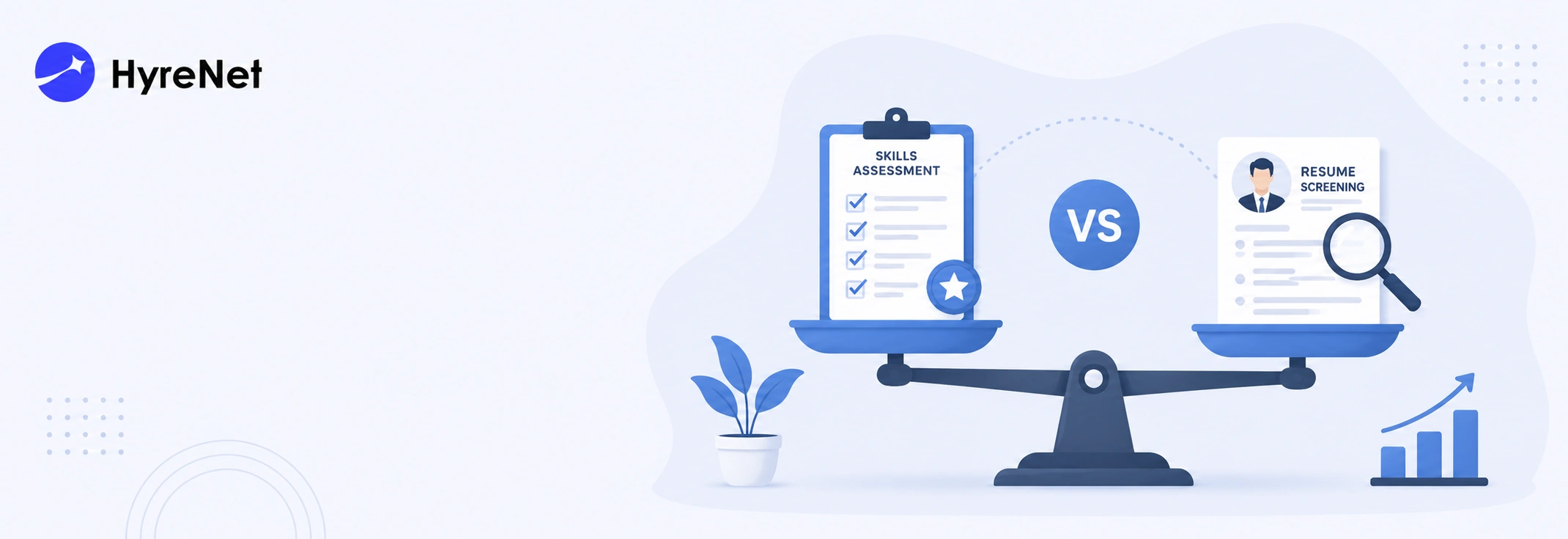

Every hiring team has been there. You spend hours going through resumes, shortlist the most impressive ones, bring people in, and discover that the candidate who looked perfect on paper cannot do the job. It is frustrating, expensive, and incredibly common. The debate around skills assessment vs resume screening has been growing louder for exactly this reason, and more companies are questioning whether resumes are really the right place to start. When you put skills assessment vs resume screening side by side, the differences are hard to ignore.
So which one is actually more reliable? Let us break it down honestly.
TL;DR Summary
- Resumes tell you what someone has done and skills assessments tell you what they can do right now.
- Resume screening is vulnerable to bias, exaggeration, and misrepresentation.
- Skills assessments have stronger predictive validity for actual job performance.
- The smartest hiring approach combines a light resume filter with a structured skills assessment.
- Platforms like HyreNet make assessment-first hiring practical and scalable for any team.
What Resume Screening Actually Tells You
Resume screening has been the default first step in hiring for decades. You look at where someone worked, what titles they held, which degrees they earned, and how long they stayed in each role. It is quick, familiar, and needs no special tools. A resume tells you what someone has done, not what they can do right now. Candidates know this, which is why resumes are carefully crafted to look as impressive as possible. Keywords get stuffed in, job titles get inflated, and gaps get creatively explained. Research from Harvard Business Review found that a significant portion of candidates misrepresent information on their resumes, and most hiring managers have no reliable way to catch it during initial screening.
There is also the bias problem. Resume screening is highly susceptible to unconscious bias. Names, universities, and previous employers can all influence how a recruiter perceives a candidate before evaluating a single actual skill. Qualified candidates get filtered out for the wrong reasons, and unqualified ones sometimes make it through based on a right-looking background.
When you look at skills assessment vs resume screening purely from a reliability standpoint, resumes start to look like a weak foundation for hiring decisions. The skills assessment vs resume screening conversation becomes even clearer when you factor in how easily resume data can be exaggerated or misrepresented.
What Skills Assessment Actually Tells You
Skills assessment flips the focus entirely. Instead of looking at what a candidate claims to have done, you find out what they can actually do right now. When you approach skills assessment vs resume screening with an open mind, the case for assessments becomes very clear very quickly. A well-designed assessment puts candidates through tasks, problems, and scenarios that reflect the real demands of the job.
The data behind this is strong. Studies in industrial and organisational psychology consistently show that work sample tests and structured skills assessments have significantly higher predictive validity for job performance than unstructured resume reviews. In the skills assessment vs resume screening comparison, assessments simply produce more accurate hiring outcomes. Company after company that has made the switch from resume-first to assessment-first hiring reports the same thing: better hires, less guesswork, and stronger team performance overall.
Skills assessments also level the playing field. A candidate who went to a less prestigious university but genuinely excels at the job will outperform someone with an impressive resume who cannot deliver. Without assessments, that candidate might never get past the resume screen. With them, the work speaks for itself.
The other advantage is consistency. Every candidate takes the same assessment under the same conditions, so you are comparing people on a level basis. Resume screening, by contrast, involves subjective judgment at every step, introducing variability into the process.
Where Skills Assessment vs Resume Screening Gets More Nuanced
It would be unfair to say resumes have no place in hiring. For senior roles, career history and domain experience genuinely matter, and skills assessment vs resume screening is not always a straightforward swap. A resume can tell you whether someone has operated at the scale or complexity your role requires, which is harder to assess through a standardised test.
The smarter approach most companies are moving toward is treating skills assessment vs resume screening not as an either-or choice but as a sequenced strategy. A light resume filter removes obvious mismatches, and then a skills assessment does the real evaluation work before any interviews take place. This keeps the process efficient without relying on resumes to do more than they are capable of.
How the Right Platform Fits Into This
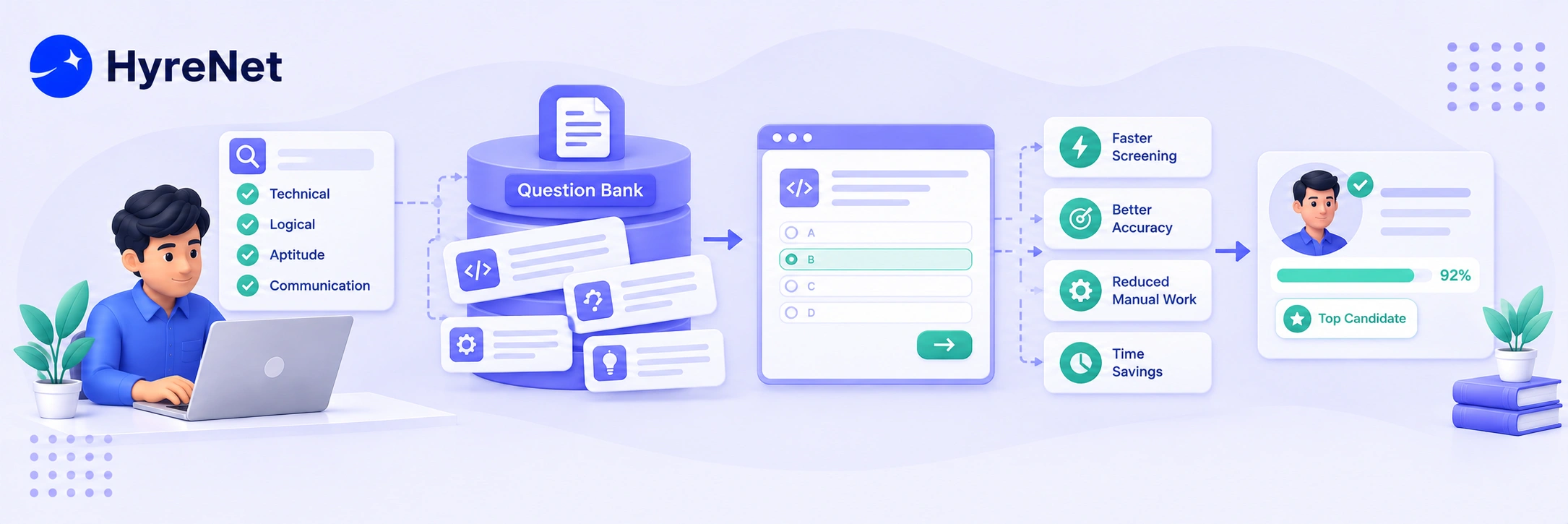
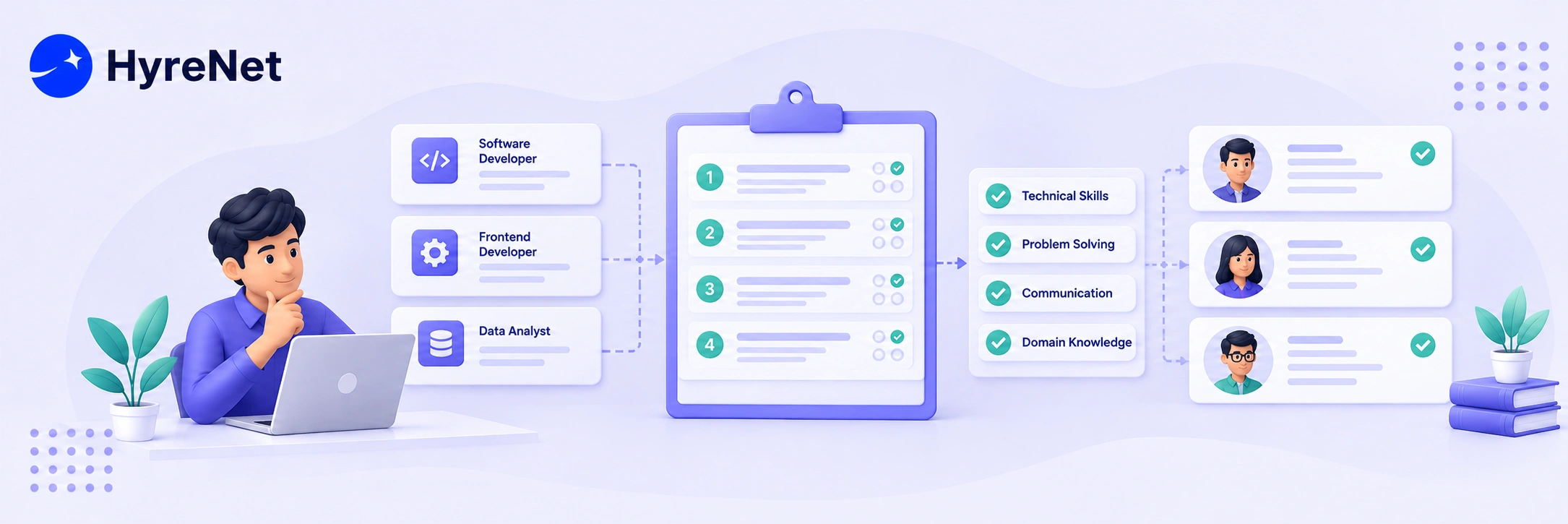
This is where a platform like HyreNet makes a real difference. Designed to make skills-based hiring practical at scale, it removes the need to manually review hundreds of resumes and hope your judgment is right. You send candidates a structured assessment that tests exactly the skills the role requires, and the platform generates detailed reports covering how candidates think, how they approach problems, and how they compare against others in the pipeline. Recruiters spend less time guessing and more time making confident decisions.
The skills assessment vs resume screening question comes up constantly in recruitment conversations, and the honest answer is that assessments are more reliable for predicting job performance. Organisations that understand the skills assessment vs resume screening difference and act on it consistently make better hiring decisions over time.
Also read – 5 Reasons Why HyreNet’s Recruitment Platform Easily Stands Out in Talent Acquisition
Which Should You Choose?
If your goal is to hire people who can genuinely do the job, skills assessment vs resume screening is not really a close contest. Assessments give you data. Resumes give you stories. Both have a role, but the weight you give each one should reflect what you are actually trying to find out. Any recruiter who has studied skills assessment vs resume screening in depth will tell you the same thing.
More companies are shifting toward assessment-first hiring, and the results speak for themselves. Fewer bad hires, shorter time-to-hire, and a more diverse candidate pool that resumes alone would have filtered out. The skills assessment vs resume screening debate has a clear winner when it comes to predicting who will actually perform. The question is not really which one is more reliable. The question is how quickly your hiring process catches up to what the evidence already shows.
FAQs
1. What is the main difference between skills assessment and resume screening?
Resume screening looks at a candidate’s past such as where they worked, what titles they held, and what they studied. Skills assessment looks at what they can actually do right now. In the skills assessment vs resume screening debate, assessments are consistently better at predicting real job performance.
2. Are resumes completely unreliable for hiring?
Not completely. Resumes are useful for understanding career history, domain experience, and seniority level, especially for senior roles. The problem is when resumes are used as the primary evaluation tool rather than a light initial filter before a structured assessment takes over.
3. Do skills assessments reduce bias in hiring?
Yes, significantly. Because every candidate takes the same assessment under the same conditions, you are comparing people on ability rather than background, university name, or job title. This makes the process fairer and often surfaces strong candidates who would have been filtered out by resume screening alone.
4. How does HyreNet help with skills-based hiring?
HyreNet lets you send role-specific assessments to candidates, automatically screens results, and generates detailed reports on technical performance, problem-solving ability, and personality traits. It makes the shift from resume-first to assessment-first hiring practical without adding extra workload to your recruitment team.
5. Should companies use skills assessment and resume screening together?
Yes, and that is the approach most high-performing hiring teams are moving toward. A brief resume filter removes obvious mismatches, and then a skills assessment does the real evaluation work. This combination keeps the process efficient while ensuring that the decisions that actually matter are based on demonstrated ability, not a polished document.