


Hiring the right person is harder than it looks. Most companies still rely heavily on resumes and interviews, but neither of those things reliably tells you whether someone can actually do the job. Resumes are carefully crafted to look impressive, and interviews are shaped by how confident someone comes across rather than how capable they actually are. That is where candidate assessment comes in. It gives hiring teams a structured, objective way to evaluate applicants based on real ability rather than gut feel or an impressive-looking CV.
If you have ever hired someone who seemed perfect in the interview but struggled once they started, you already know exactly why this matters.
TL;DR Summary
- Candidate assessment gives you real data on what people can actually do.
- Skills-based tests, aptitude tests, personality assessments, video assessments, and technical assessments each serve different hiring needs.
- Structured assessment has higher predictive validity for job performance than interviews or resume reviews.
- It reduces bias, shortens time-to-hire, and significantly lowers the cost of a bad hire.
- Platforms like HyreNet make running structured candidate assessment fast, consistent, and scalable.
What Is Candidate Assessment?
Candidate assessment is the process of evaluating job applicants using structured tests, tasks, or tools designed to measure their skills, knowledge, personality, and potential. Unlike a resume, which tells you what someone has done in the past, it shows you what someone can actually do right now. It brings consistency and real data into a process that is otherwise highly subjective, which is one of the main reasons more companies are adopting it at scale every year.
Types of Candidate Assessment
Not all methods are the same. Different roles call for different approaches, and understanding the types helps you choose the right one for what you are hiring for.
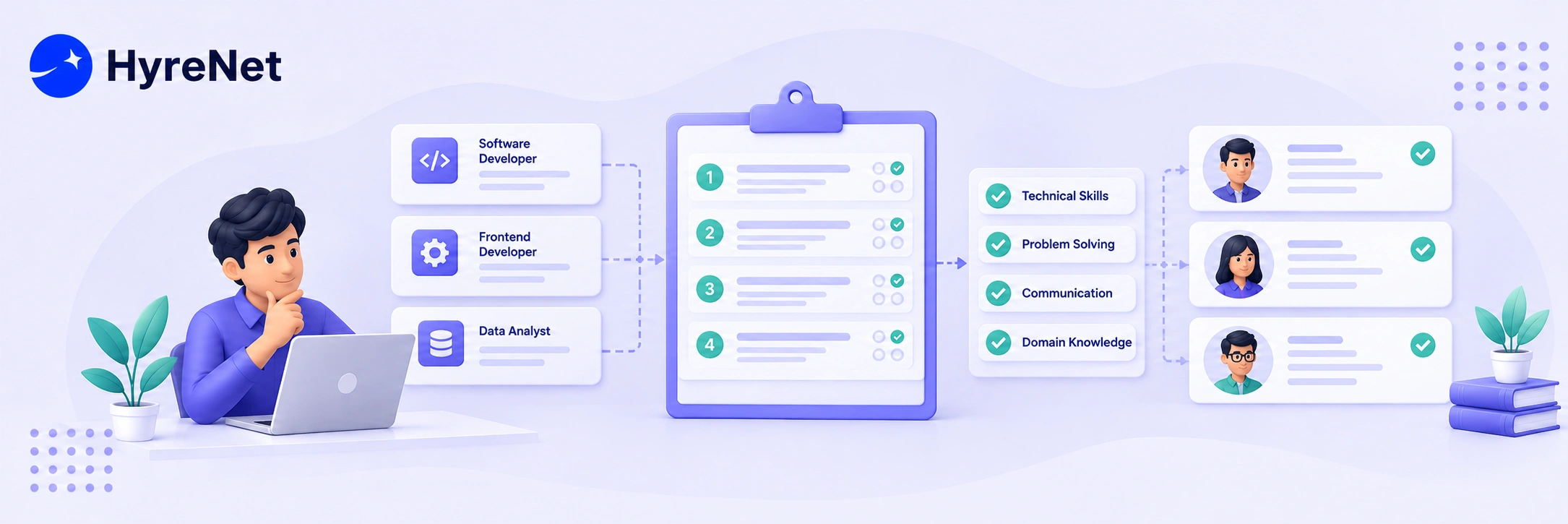
- Skills-Based Tests – These measure a candidate’s practical ability in areas directly relevant to the role. A coding test for a software developer, a writing task for a content role, or a data analysis exercise for an analyst position are all examples. Skills-based candidate assessment is widely considered the most reliable predictor of actual job performance because it reflects exactly what the person will be doing day to day.
- Aptitude and Cognitive Tests – These measure how quickly and accurately someone can process information, solve problems, and apply logic. They are particularly useful for roles involving a lot of decision-making or where learning speed matters. This type of evaluation helps identify candidates with strong potential even when their work experience is limited.
- Personality Assessments – These look at behavioural tendencies, communication style, and how someone is likely to work within a team. Personality-based candidate assessment does not have right or wrong answers. It gives recruiters useful context about how a person approaches their work, how they handle pressure, and whether they are likely to fit well into the team they are joining. For many roles, this kind of insight is just as important as technical ability.
- Video Assessments – Candidates record responses to pre-set questions, which recruiters can review at their own pace. This type of candidate assessment is especially useful for evaluating communication skills and cultural fit at an early stage, without the need to schedule live calls with everyone in the pipeline. It saves significant time while still giving recruiters a genuine feel for the person behind the application.
- Technical Assessments – Common in engineering, IT, and data roles, these go deeper into domain-specific knowledge and problem-solving. Technical candidate assessment typically involves real-world scenarios that simulate what the role actually demands, which makes it one of the most practical tools available for specialist hiring.
Benefits of Structured Candidate Assessment
The shift toward structured evaluation is not just a trend. The results back it up consistently.
Better hiring decisions – When decisions are based on performance data rather than impressions from a thirty-minute conversation, fewer mistakes get made. Research shows that structured candidate assessment has significantly higher predictive validity for job performance compared to unstructured interviews or resume reviews alone.
Reduced time-to-hire – Proper screening filters out poor fits early. Instead of spending hours interviewing people who were never going to work out, recruiters can focus on the shortlist that has already demonstrated its ability through the assessment stage. This alone can cut days off the average hiring cycle, and for fast-moving teams, that time saving is significant.
Fairer, more consistent evaluation – Every applicant goes through the same process under the same conditions. This removes a lot of the unconscious bias that creeps into resume screening. Candidate assessment creates a level playing field where ability speaks louder than background, presentation, or which university someone attended.
Lower cost of a bad hire – A poor hiring decision can cost a company anywhere from 30% to 150% of that person’s annual salary when you account for lost productivity, rehiring costs, and training time. Effective candidate assessment reduces that risk significantly before anyone gets an offer.
How HyreNet Supports This Process
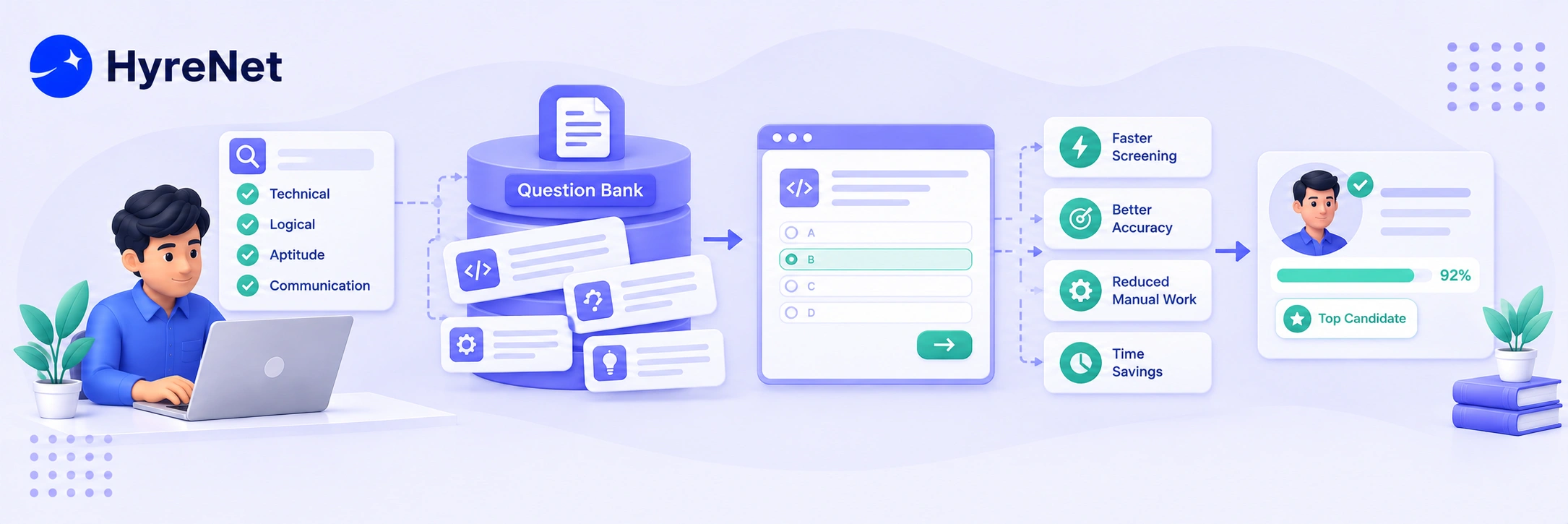
Running candidate assessment manually across a large applicant pool is time-consuming and hard to keep consistent. Different recruiters evaluate differently, criteria shift between rounds, and before long the process stops being fair. HyreNet is built to solve that problem. The platform lets companies design and send assessments tailored to specific roles, complete with AI-generated questions, automated proctoring, and detailed reports on every applicant.
Recruiters get structured data instead of gut feelings, and the whole process becomes something that actually supports the team rather than adding to their workload. Companies using HyreNet report faster shortlisting, better quality shortlists, and more confident final decisions across the board.
Why This Approach Is the Future of Hiring
Companies that continue relying purely on resumes and informal conversations are making decisions based on incomplete information. Candidate assessment gives you something better: real data about real ability, collected consistently and fairly across every applicant, at every stage of the process.
Whether you are filling one role or running a high-volume hiring campaign, building structured evaluation into your process from the start is one of the highest-impact changes you can make to the quality of your hires. The companies doing this well are already seeing fewer bad hires, shorter recruitment cycles, and stronger team performance overall.
Also read – Top 10 Recruitment Challenges and How Modern Assessment Platforms Solve Them Quick
FAQs
1. What is candidate assessment?
Candidate assessment is a structured process of evaluating job applicants using tests, tasks, and tools that measure real skills, cognitive ability, personality, and potential. It replaces guesswork with actual data, giving hiring teams a much clearer picture of who can do the job before any offer is made.
2. What are the different types of candidate assessment?
The main types are skills-based tests, aptitude and cognitive tests, personality assessments, video assessments, and technical assessments. Each serves a different purpose, and the right mix depends on the role you are hiring for and what qualities matter most for that position.
3. Is candidate assessment better than interviews?
For predicting actual job performance, yes. Research consistently shows that structured candidate assessment has higher predictive validity than unstructured interviews. Interviews are still useful for evaluating culture fit and communication, but they should come after assessment has already filtered the pipeline down to the strongest candidates.
4. How does candidate assessment reduce hiring bias?
Because every candidate goes through the same assessment under the same conditions, the evaluation is based on demonstrated ability rather than subjective impressions. This significantly reduces the unconscious bias that affects resume screening, where names, universities, and previous employers can unfairly influence decisions.
5. How does HyreNet make candidate assessment easier?
HyreNet lets you build and send role-specific assessments, generate questions automatically using AI, monitor candidates with built-in proctoring, and receive detailed performance reports for every applicant. It makes structured candidate assessment scalable and consistent without adding extra workload to your recruitment team.