

Picture this. You post a job, and within an hour you get fifty applications, half of them polished by AI, some barely relevant to the role. Sound familiar?
Recruiting in 2026 looks nothing like it did even three years ago, and keeping up with the latest hiring trends is no longer optional.
Hiring trends are simply the recurring shifts in how companies attract, screen, and hire people. They come from changes in technology, candidate expectations, and the wider job market, and they move fast enough that ignoring them can quietly cost you good candidates.
This blog walks through the hiring trends actually shaping 2026, in plain language, along with practical ways to adapt without turning your process upside down.
TL;DR Summary
- AI is now used on both sides of hiring, by recruiters screening candidates and by candidates writing applications
- Skills-based hiring is replacing degree-first screening for a growing number of roles
- Smart recruiters are mining their own candidate database before sourcing new applicants
- Flexible and hybrid work remains a top expectation, not a bonus perk
- Verification and evidence-based screening matter more as AI-generated resumes rise
- Reducing recruiter admin work and burnout is becoming a real business priority
Why These Hiring Trends Matter Right Now
The job market shifts every year, but 2026 feels different because AI is changing both sides of the hiring table at once. Candidates use AI to polish resumes and even practice interview answers, while recruiters use it to screen, rank, and shortlist faster than ever.
This creates a strange new problem. Applications look better than ever on paper, but that polish does not always match real ability. Understanding the hiring trends behind this shift helps recruiters separate genuine skill from a well written prompt.
Ignoring these hiring trends does not make them go away. It just means you find out the hard way, usually after a bad hire, that your process needs an update.
A Quick Look at the Top Hiring Trends in 2026
This table sums up the hiring trends covered in this guide, before we break each one down in more detail.
| Trend | What It Means | Why It Matters |
|---|---|---|
| AI on both sides | Recruiters and candidates both use AI tools | Old screening methods can miss real skill gaps |
| Skills-based hiring | Testing actual ability over degrees or titles | Widens the talent pool and improves fit |
| Database-first sourcing | Re-engaging candidates you already have | Cuts sourcing costs and speeds up hiring |
| Flexible work expectations | Hybrid and remote options as a baseline | Affects who applies and who accepts an offer |
| Verification-first screening | Confirming skills before the offer stage | Protects against inflated or AI-written resumes |
AI Is Now Used on Both Sides of Hiring
This is arguably the biggest of all the hiring trends shaping 2026, since it changes the reliability of nearly every other part of the process.
- Candidates use AI too: Many applicants now use AI tools to write resumes, cover letters, and even prep interview answers, which can make every application look equally strong on paper
- Recruiters lean on AI for speed: Resume screening, initial ranking, and even scheduling are increasingly automated to handle high application volumes
- The risk is surface-level polish: A well written application does not always reflect real skill, so relying on resumes alone is riskier than it used to be
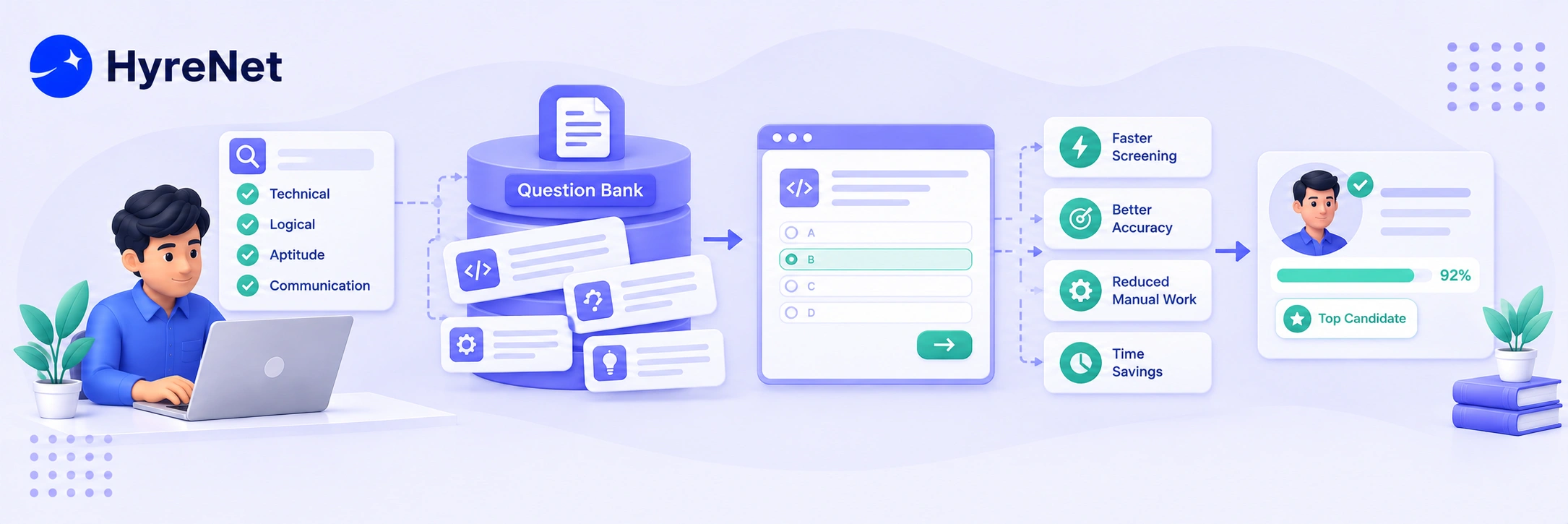
- Assessments are the fix: Testing actual ability directly, rather than trusting a polished resume, is quickly becoming standard practice
If you want to see how this plays out in practice, do check out HyreNet’s blog for real examples of AI-powered assessments cutting hiring costs while still measuring genuine skill.
Skills-Based Hiring Is Replacing Degree-First Screening
Among the hiring trends gaining the most traction right now, this shift is reshaping who even gets considered for a role.
- Degrees are losing their gatekeeping power: More companies are dropping strict degree requirements in favor of proven, demonstrable skills
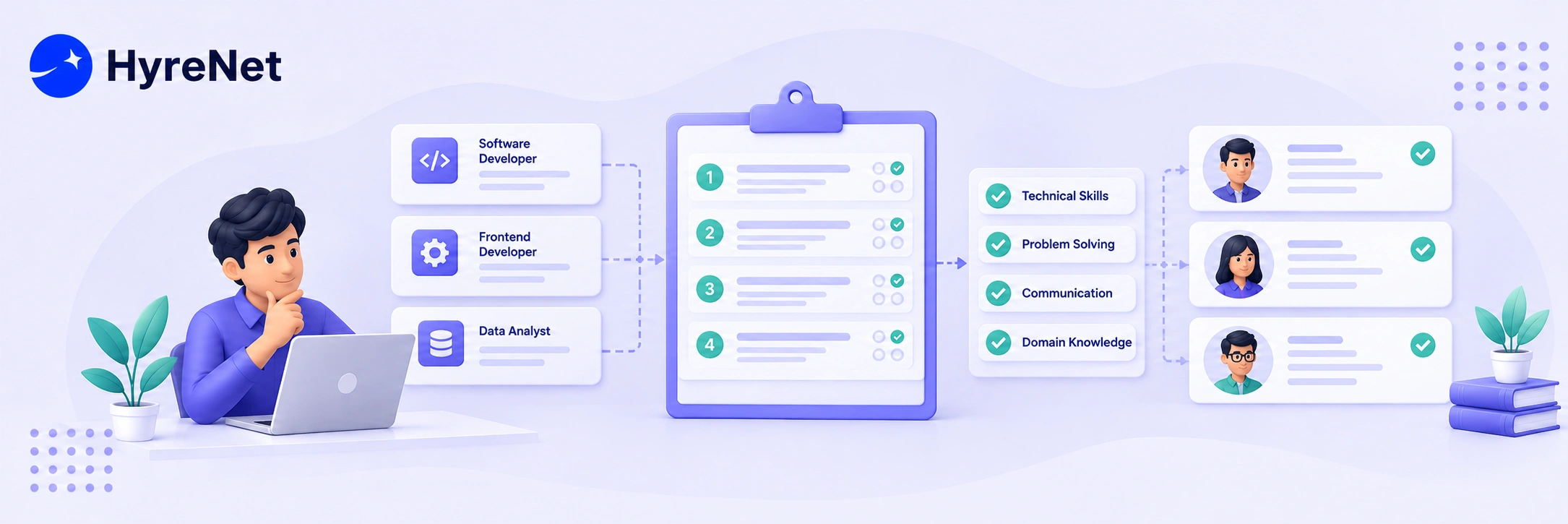
- Practical tests are becoming common: A short coding challenge, writing sample, or scenario exercise often tells you more than a transcript
- This widens the talent pool: Skilled candidates without a traditional degree finally get a fair shot at roles they are qualified for
- It also reduces mismatches: Hiring for demonstrated ability, not just credentials, tends to reduce early turnover
Recruiters Are Mining Their Own Database First
Sourcing brand new candidates for every open role is expensive and slow, and this shift is one of the quieter hiring trends recruiters are catching onto.
A growing number of recruiters are flipping that habit by searching their own applicant database before spending time and budget on fresh outreach.
Past applicants who were a near miss for one role are often a strong fit for another that opens later.
Treating your existing pipeline as a reusable asset, rather than starting from zero every time, is one of the more overlooked hiring trends of 2026, and it is also one of the cheapest to act on.
Flexible Work Is Still a Top Expectation
Not every one of these hiring trends is about AI. Candidate expectations around flexibility have quietly become just as important.
- Hybrid and remote options remain a baseline ask: Many candidates now filter job listings by flexibility before anything else
- Rigid, office-only roles see fewer strong applicants: Companies that hold onto strict in-office policies risk narrowing their own talent pool
- Async work is gaining ground too: Some roles now offer flexible hours, not just flexible location
- This trend affects offer acceptance, not just applications: Candidates increasingly decline offers that do not match their expected flexibility
Verification-First Screening Is Becoming the Norm
This is one of the more defensive hiring trends on this list, built as a direct response to how easy resumes are to polish now.
- Resume inflation is a real concern: With AI making it easy to polish or exaggerate experience, verifying claims early protects hiring quality
- Skills tests catch what resumes hide: A structured assessment shows what a candidate can actually do, not just what they say they can do
- This should happen during screening, not just at the offer stage: Catching a mismatch early saves everyone time
- It builds trust on both sides: Candidates who pass a fair, relevant test enter the role with confidence, and so does the hiring team
Platforms like HyreNet are built around exactly this shift, combining skills testing, cognitive checks, and detailed candidate reports in one place, so recruiters can verify ability quickly without slowing down the process.
Tips for Adapting to These Hiring Trends
You do not need to overhaul your entire process to keep up with hiring trends. Small, deliberate changes usually work better than a full rebuild.
- Start with one change at a time: Pick the trend most relevant to your current hiring pain point instead of overhauling everything at once
- Lean on your existing database: Before sourcing new candidates, check who is already in your pipeline
- Add a skills check early: Even a short assessment catches mismatches before they reach the interview stage
- Ask candidates directly about flexibility needs: This avoids losing strong candidates late in the process over a mismatch that could have been caught earlier
- Revisit your approach every few months: Hiring trends shift quickly enough that a process built a year ago may already need small adjustments
Common Mistakes Recruiters Make With Hiring Trends
- Chasing every trend at once: Trying to adopt every shift simultaneously usually backfires, so prioritize what fits your team’s actual needs
- Ignoring database-first sourcing: Constantly sourcing new candidates while ignoring a warm, existing pipeline wastes both time and budget
- Skipping verification: Trusting a polished resume without any skills check leaves you exposed to mismatched hires
- Treating flexibility as optional: Underestimating how much flexible work expectations affect offer acceptance can cost you strong candidates late in the process
- Assuming last year’s playbook still works: Hiring trends move fast, and a process that worked well in 2024 may already be outdated
For a deeper look at how modern platforms are solving these exact challenges, do check out HyreNet’s post on common recruitment challenges and how assessment platforms address them.
Conclusion
Hiring trends in 2026 come down to one core shift. AI has made applications easier to polish, which means real signal now has to come from somewhere else.
Whether that is a skills test, a smarter sourcing habit, or a genuine understanding of what candidates actually want, the answer has to go beyond the resume.
Recruiters who stay ahead of these hiring trends are not chasing every new tool. They are picking the changes that genuinely fix their biggest hiring pain points and building from there.
FAQs
Do I need to adopt every hiring trend to stay competitive?
No. Trying to adopt every hiring trend at once usually creates more friction than it solves. Pick the one or two trends that address your team’s actual hiring pain points first.
How do I verify skills without slowing down my hiring process?
A short, focused assessment early in screening, rather than a long test at the final stage, catches mismatches quickly without adding significant delay to your timeline.
Is database-first sourcing actually faster than new outreach?
Usually yes, since past applicants have already shown interest and often some level of fit. Re-engaging them skips several steps that fresh sourcing requires from scratch.
Does skills-based hiring mean ignoring experience entirely?
No. It means weighing demonstrated ability alongside experience, rather than using a degree or years of experience as the sole filter before someone even gets considered.
Why does flexible work affect offer acceptance so strongly?
Many candidates now treat flexibility as a baseline requirement rather than a bonus, so a rigid, office-only offer can lose out even when the pay and role itself are competitive.