
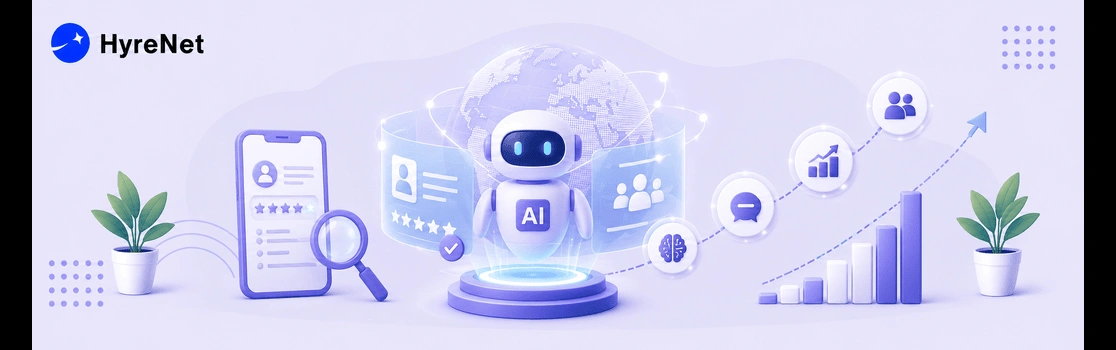

A recruiter used to spend hours screening resumes, scheduling interviews, and chasing candidates for updates. Now, an AI agent handles most of that before the recruiter even opens their inbox. That shift is not coming someday, it is already happening, and it is only the beginning of the Future of AI Recruitment.
The Future of AI Recruitment simply means where hiring is headed as artificial intelligence takes on more of the process, from sourcing candidates to screening skills to predicting who will actually succeed in a role. It is not about replacing recruiters, it is about changing what recruiters spend their time doing.
This blog walks through the biggest shifts shaping the Future of AI Recruitment beyond 2026, in plain language, along with what recruiters should actually do to prepare as it keeps evolving.
TL;DR Summary
- AI has already absorbed a large share of repetitive recruiting tasks, and that share keeps growing
- Autonomous AI agents are starting to run entire sourcing and screening workflows, not just assist with them
- Skills-based hiring is replacing degree requirements at a rapid pace, especially when backed by real assessments
- Human judgment remains essential for final decisions, relationship building, and cultural fit
- AI proficiency itself is becoming something companies test for, not just a tool they use
- Recruiters who adapt now will spend more time on strategy and less on admin work as the Future of AI Recruitment unfolds
Why the Future of AI Recruitment Is Already Here
AI in hiring is not a future concept anymore, it is already deeply embedded in how most companies recruit. The vast majority of large companies now use some form of AI in their hiring process, and adoption keeps climbing every year.
What has changed recently is not just adoption, but depth. Early AI tools mostly helped recruiters work faster. Newer systems are starting to run entire parts of the hiring process on their own, from sourcing to scheduling, which is a much bigger shift.
Understanding the Future of AI Recruitment means understanding this move from AI as an assistant to AI as an active participant in the hiring pipeline.
Key Trends Shaping the Future of AI Recruitment
These are the shifts worth paying attention to as the Future of AI Recruitment keeps moving fast.
- Autonomous AI agents taking over sourcing: AI agents are increasingly running the full source-to-screen-to-schedule loop, not just helping with pieces of it
- Skills-based hiring becoming standard: Companies are dropping degree requirements in favor of tested, demonstrable ability, especially where real assessments back up the decision
- AI proficiency becoming a hiring requirement itself: A growing share of hiring processes are expected to test candidates on their ability to work with AI tools
- Shrinking recruiter headcount, growing recruiter scope: Fewer recruiters are handling more requisitions, spending recovered time on strategy instead of admin work
- Rising regulation around AI in hiring: New transparency and bias-audit rules are pushing companies toward more accountable, explainable AI systems
What the Data Actually Shows About the Future of AI Recruitment
A few current numbers help put things in perspective, instead of relying on vague predictions.
| Data Point | What It Shows |
|---|---|
| The vast majority of large companies now use AI in hiring | AI adoption in recruitment is already mainstream, not experimental |
| A majority of hiring managers report improved efficiency with AI | The productivity gains are showing up in real, measured results |
| A large share of companies dropped degree requirements recently | Skills-based hiring is accelerating faster than expected |
| Companies expect a large share of hiring processes to test AI proficiency by 2027 | AI skill itself is becoming part of what gets evaluated in candidates |
| Most hiring managers still say human involvement remains essential | Full automation of final hiring decisions is not the direction this is heading |
The pattern across these numbers is consistent. The Future of AI Recruitment is not about removing people from hiring, it is about changing which parts of the process people actually spend their time on.
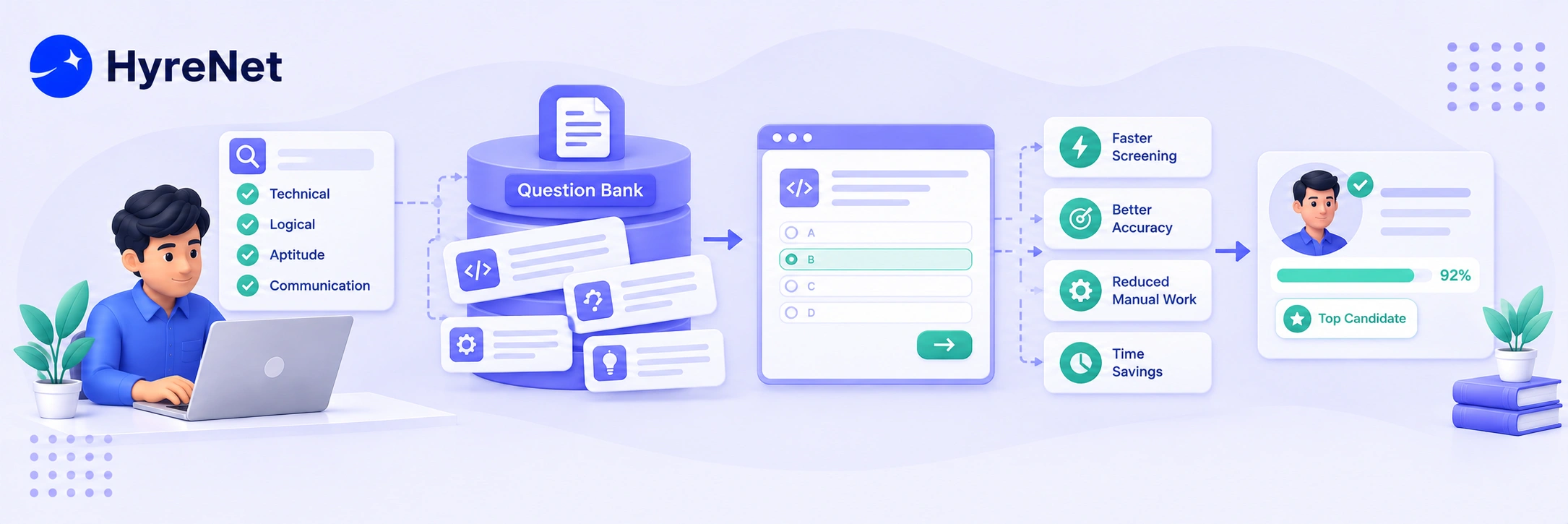
If you want to see how this shift plays out in real hiring processes, do check out HyreNet’s blog for practical examples of AI-powered assessments in action.
What This Means for Skills-Based Hiring in the Future of AI Recruitment
One of the clearest threads running through this shift is the move away from resumes and degrees toward proof of actual ability. Simply removing degree requirements from a job posting does not do much on its own.
Companies that pair that change with real, structured assessment infrastructure see a much bigger improvement in who they actually hire, compared to companies that just change the wording of a job listing.
This is exactly why skills assessments are becoming more central to modern hiring, not less. As AI makes resumes easier to polish and applications easier to submit in bulk, real, demonstrated skill becomes one of the few reliable signals left.
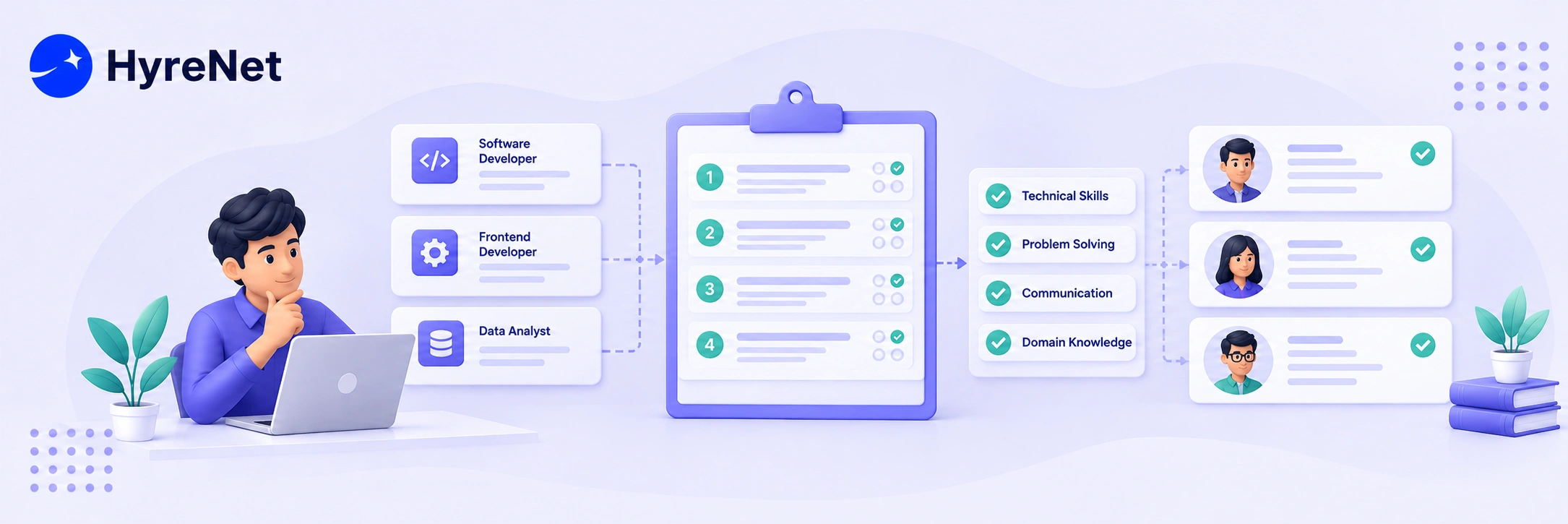
For a closer look at how structured assessments fit into this shift, do check out HyreNet’s breakdown of common recruitment challenges and how modern platforms are solving them.
Where Human Judgment Still Matters
Even as AI takes on more of the process, most hiring managers are clear that people still need to be involved in the final decision.
- Cultural and team fit: AI can screen for skill, but judging how someone will work within a specific team still needs a human read
- Relationship building: Candidates remember how they were treated by a person, not by an algorithm
- Ethical oversight: Someone needs to catch when an AI system is making a biased or unfair call
- Final hiring decisions: Most organizations still keep a human firmly in the loop before an offer goes out
The Future of AI Recruitment is best understood as a partnership, not a replacement. AI handles volume and repetition, while people handle judgment and relationships, and that balance is what makes this shift sustainable rather than a wholesale replacement of hiring teams.
Platforms like HyreNet are built around this exact balance, using AI-powered assessments to generate objective, structured data while still leaving the final call to the hiring team.
How Recruiters Can Prepare for the Future of AI Recruitment
- Get comfortable with AI tools now: Waiting until adoption is mandatory puts you behind teams already using it daily
- Invest in real assessment infrastructure: Skills-based hiring only works well when backed by proper testing, not just removed degree requirements
- Focus your time on relationship-heavy work: As AI absorbs admin tasks, spend the recovered time on candidate relationships and hiring manager partnership
- Stay aware of emerging regulation: Bias audits and transparency rules are becoming a real compliance requirement, not just a best practice
- Track what AI actually improves: Measure time-to-hire, quality of hire, and candidate experience before and after adopting new tools
Common Mistakes Companies Make
Even companies excited about the Future of AI Recruitment fall into a few predictable traps.
- Adopting AI tools without a clear process: Buying a platform does not automatically fix broken screening or interview stages
- Removing degree requirements without adding assessments: This alone barely moves hiring outcomes without a real way to test skill
- Assuming AI removes the need for human judgment: Most hiring managers still consider human involvement essential for final decisions
- Ignoring bias and compliance risks: Skipping audits or transparency requirements can create serious legal exposure as regulation catches up
Conclusion
The Future of AI Recruitment is not a distant, abstract idea, it is already reshaping how companies source, screen, and hire people today.
The trends worth watching are clear: more autonomous AI handling repetitive work, more emphasis on tested skills over credentials, and a continued need for human judgment where it actually matters.
Recruiters who adapt now, rather than waiting for these shifts to become mandatory, will be the ones spending their time on the work that genuinely benefits from a human touch as the Future of AI Recruitment continues to unfold.
FAQs
1. Will AI eventually replace recruiters completely?
Unlikely based on current data. Most hiring managers still consider human involvement essential for final decisions, relationship building, and cultural assessment, even as AI handles more of the repetitive work.
2. What is the biggest change AI is bringing to hiring right now?
The shift from AI as a helper tool to AI as an autonomous agent running entire parts of the process, like sourcing and screening, without constant human input at every step.
3. Does skills-based hiring actually work without AI assessments?
It works far better with them. Simply dropping degree requirements shows only a small improvement, while pairing that change with real assessment infrastructure shows a much bigger one.
4. Should recruiters worry about AI proficiency testing for candidates?
It is worth paying attention to, since a growing share of hiring processes are expected to test candidates on AI proficiency in the near future, especially in tech-heavy roles.
5. How can a smaller company keep up with the Future of AI Recruitment?
Start small, focus on one high-impact area like skills assessments or screening automation, and expand from there rather than trying to adopt every trend simultaneously.