

Recruiting fresh talent from colleges has always been competitive. But campus hiring in 2026 looks very different from what it did even a few years ago. Students expect faster processes, digital-first experiences, and feedback that actually respects their time. Companies that are still running slow, paper-heavy campus drives are losing good candidates to faster-moving competitors before the process even gets going. Getting campus hiring in 2026 right is not optional anymore, it is a competitive necessity.
If you want to win at campus hiring in 2026, the way you approach it needs to change.
TL;DR Summary
- Campus hiring in 2026 demands speed, digital-first processes, and structured assessments from the very start.
- Moving assessments earlier in the process saves time and filters out poor fits before interviews begin.
- AI proctoring ensures remote campus tests produce honest, reliable results at any scale.
- Generic tests do not work, role-specific assessments give you data you can actually act on.
- Automating follow-ups and reminders keeps the pipeline moving without adding workload to your HR team.
- Companies that make campus hiring in 2026 faster and more data-driven consistently attract better talent.
Why Campus Hiring in 2026 Is Different
The students entering the job market today are digital natives. They apply to ten companies at once, compare hiring experiences, and make decisions quickly. A clunky assessment process or a weeks-long silence after a test is enough to push them toward someone else. Campus hiring in 2026 demands speed, clarity, and a process that feels modern from the student’s perspective.
At the same time, the volume of applicants at campus drives has grown significantly. Without the right tools, evaluating hundreds of candidates fairly and quickly becomes an operational challenge that most HR teams are not equipped to handle manually.
Start With Structured Pre-Assessment Screening
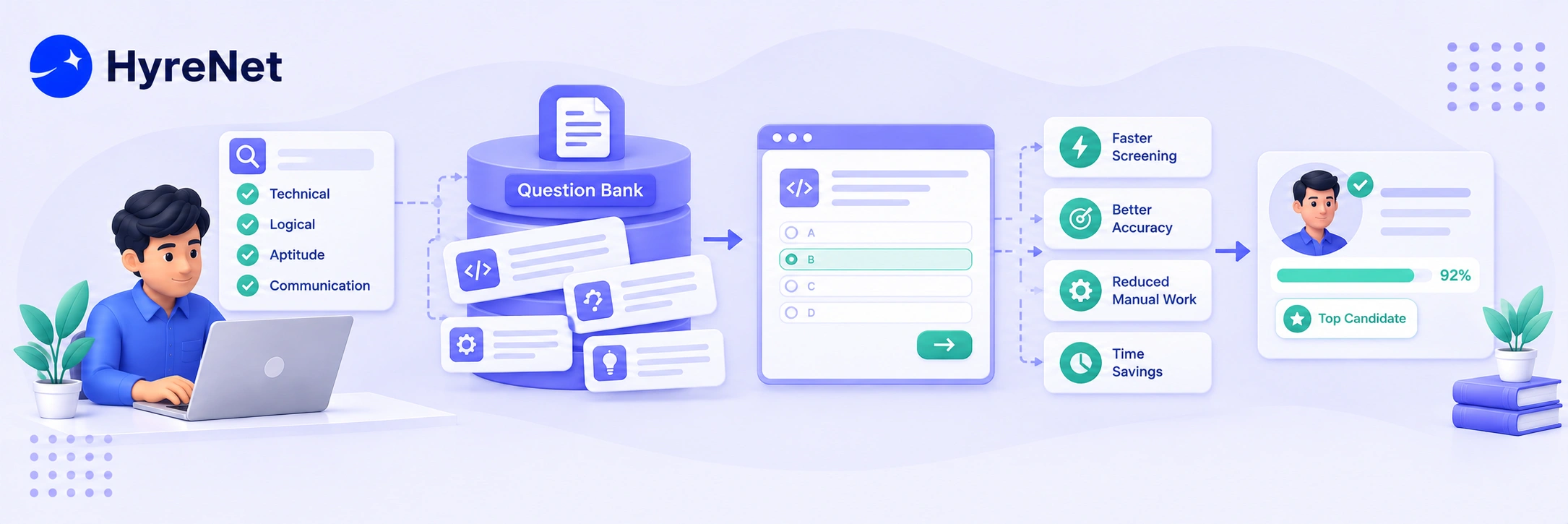
One of the most effective changes you can make to campus hiring in 2026 is moving assessment earlier in the process. Instead of waiting for interview rounds to filter candidates, send a structured skills or aptitude assessment as the very first step after registration.
This immediately separates students who meet the minimum criteria from those who do not, without your team having to review every single application manually. You end up with a focused shortlist before a single interview is scheduled, which saves enormous amounts of time on both sides.
Use Role-Specific Assessments, Not Generic Tests
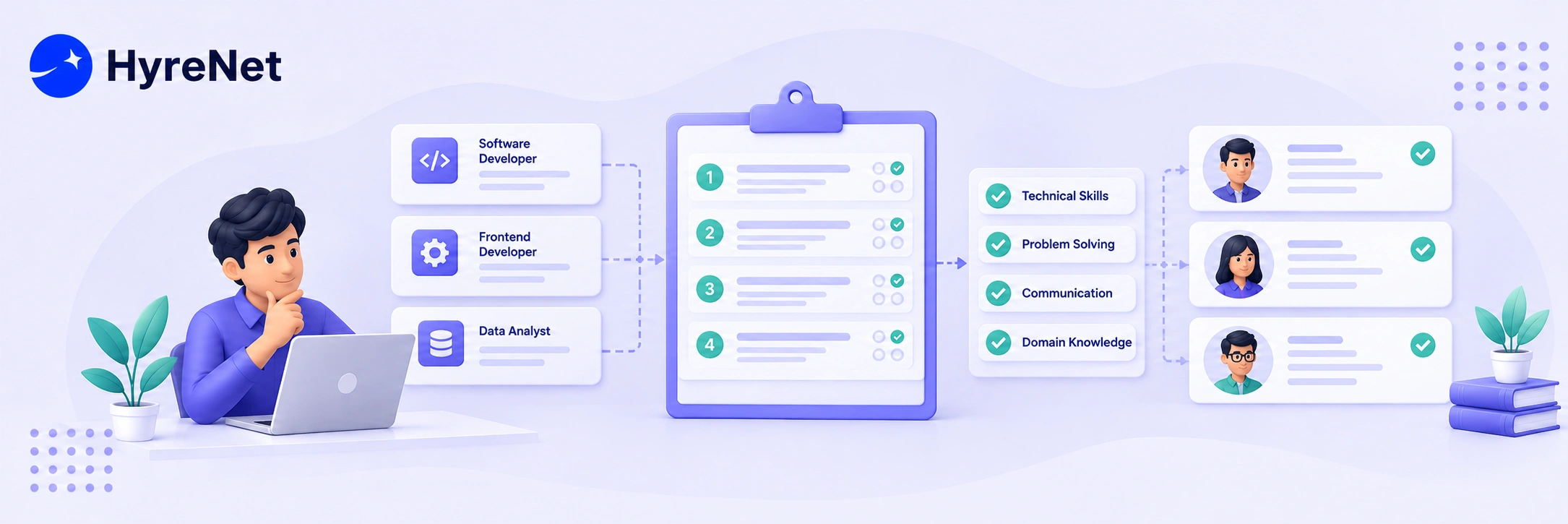
A common problem in campus hiring in 2026 is that companies send the same test to every candidate regardless of the role. A student applying for a software engineering position and one applying for a business analyst role are being assessed on completely different skill sets. Generic tests produce data that is hard to act on and often misleading.
Build or use templates that are tailored to each role. Test the actual skills the position requires, whether that is coding ability, logical reasoning, communication, or problem-solving. The more specific the assessment, the more useful the output.
Automate Everything You Can
Manual follow-up at scale is one of the biggest bottlenecks in campus hiring in 2026. When you are processing applications from multiple colleges at once, sending individual emails, tracking who has completed what, and scheduling reminders takes up time that should be spent evaluating candidates, not chasing them.
A good assessment platform automates all of this. Invites go out automatically, reminders are triggered for incomplete tests, and results land in one centralised dashboard without your team having to chase anything. The whole campus drive keeps moving smoothly even when volumes are high.
Do Not Skip Proctoring
Campus assessments are often taken on personal devices, in uncontrolled environments, with plenty of opportunity to cheat. This is a real problem for campus hiring in 2026, especially when hundreds of candidates are taking the same test simultaneously across different locations.
AI proctoring removes this risk without requiring a human supervisor for every session. It monitors webcam feeds, screen activity, and browser behaviour throughout the test, flagging anything suspicious for recruiter review. The results you get are honest, which means the decisions you make based on them are more reliable.
Give Candidates a Good Experience
A significant part of successful campus hiring in 2026 is how students feel about your company after going through your process. Word travels fast on campus. If your assessment is confusing, too long, or leaves candidates in the dark for weeks, that reputation spreads.
Keep assessments focused and reasonably timed. Communicate clearly about what the test involves, how long it takes, and what happens after. Even an automated message confirming receipt and giving a rough timeline goes a long way toward building a positive impression of your brand among students who are evaluating multiple companies at the same time.
Review Your Data After Every Drive
Campus hiring in 2026 should not be a set-and-forget process. After every campus drive, look at your completion rates, your time-to-hire, and how your top performers from campus are doing once they are on the job. This data tells you whether your assessments are actually predicting performance, and where adjustments need to be made before the next season.
HyreNet’s built-in analytics give you this visibility in one place. You can see how candidates performed across different colleges, which assessments are producing the best hires, and where candidates are dropping out of the process. That kind of insight makes every subsequent campus hiring in 2026 drive better than the last.
Make Speed Your Competitive Advantage
The best students get multiple offers. In campus hiring in 2026, the company that moves fastest through the process, from assessment to offer, has a genuine advantage. Every day of unnecessary delay is an opportunity for a competitor to step in first.
Structured assessments, automated workflows, and real-time reporting cut the time between application and offer significantly. Companies that have made the switch report moving from weeks-long processes to decisions made in days. In a market where speed matters as much as the role itself, that difference is significant and often decides who the best graduates choose.
Campus hiring in 2026 rewards companies that have invested in making their process faster, fairer, and more data-driven. The tools to do that exist. The question is whether your recruitment team is using them.
Also read – Top 10 Recruitment Challenges and How Modern Assessment Platforms Solve Them Quick
FAQs
1. What makes campus hiring in 2026 different from previous years?
Students today are faster to compare hiring experiences and quicker to move on. Digital-first processes, faster turnaround times, and structured assessments are now expected rather than optional.
2. When should assessments be sent during campus hiring?
As early as possible, ideally as the very first step after a candidate registers. This filters out poor fits before any interview time is spent, saving significant time for both sides.
3. How does AI proctoring help with campus hiring?
Campus assessments are taken on personal devices in uncontrolled environments. AI proctoring monitors webcam feeds, screen activity, and browser behaviour automatically, making sure results are honest without needing a human supervisor for every session.
4. Do role-specific assessments really make a difference?
Yes. Generic tests produce data that is hard to act on. An assessment built around the actual skills a role needs gives you a much clearer picture of who can genuinely do the job.
5. How can HyreNet support campus hiring in 2026?
HyreNet provides role-specific assessment templates, AI proctoring, automated reminders, detailed candidate reports, and built-in analytics all in one platform, making it easier to run faster, fairer campus drives at any scale.