

Hiring developers becomes difficult when the evaluation method does not match the role. Some candidates perform well in live coding rounds but struggle with real project work. Others write strong code but underperform under interview pressure. That is why technical assessments and coding interviews need to be understood clearly.
Technical assessments measure practical coding, debugging, and role-specific skills at scale. Coding interviews reveal real-time thinking, communication, and problem-solving depth. Read the full blog to compare both methods and choose the right approach for developer hiring.
TL;DR
- Technical assessments measure practical coding, debugging, and role-specific skills at scale.
- Coding interviews reveal real-time thinking, communication, and problem-solving depth.
- Technical assessments work best for early screening and high-volume developer hiring.
- Coding interviews work best for shortlisted candidates, senior roles, and deeper validation.
- The strongest hiring process combines both with clear rubrics and post-hire performance tracking.
What Are Technical Assessments?
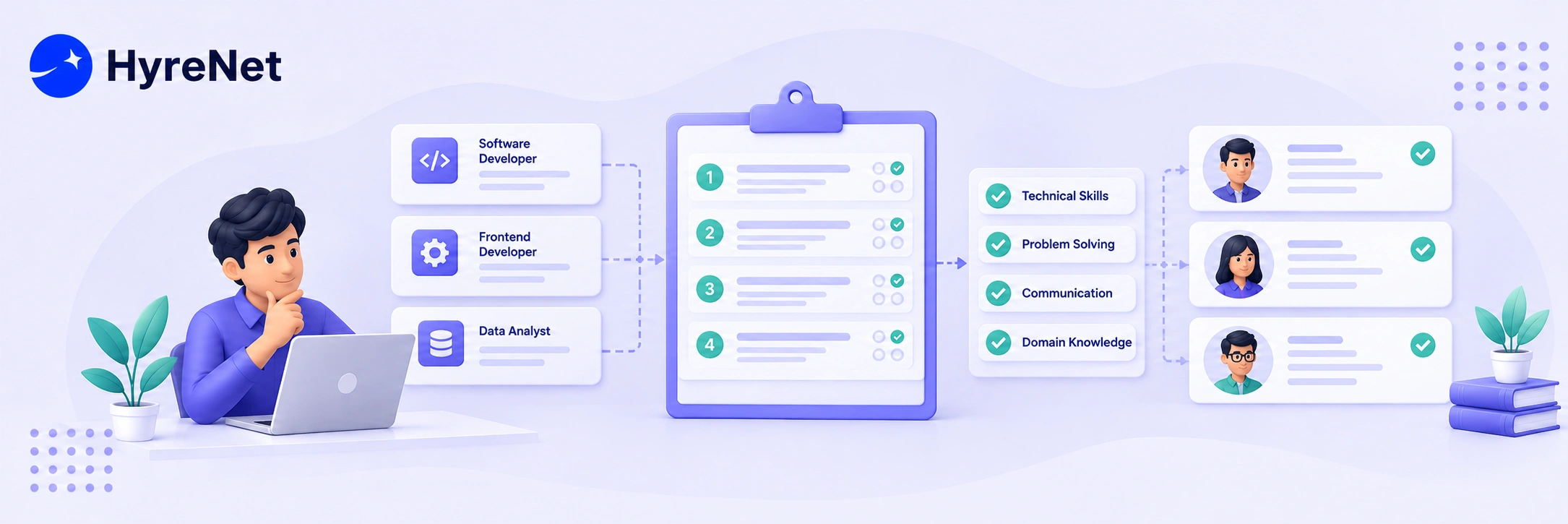
Technical assessments are structured evaluation methods used to measure a candidate’s job-specific technical skills. A well-designed technical assessment should reflect the actual responsibilities of the role. A backend developer may be tested on APIs, databases, and logic flow. A data engineer may be tested on pipelines, SQL, and data processing. This role alignment makes the assessment more useful than generic screening questions.
Common Types of Technical Assessments
- Coding tests measure a candidate’s ability to solve programming problems using a specific language or logic pattern. They are often used for software developer, frontend, backend, and full-stack roles.
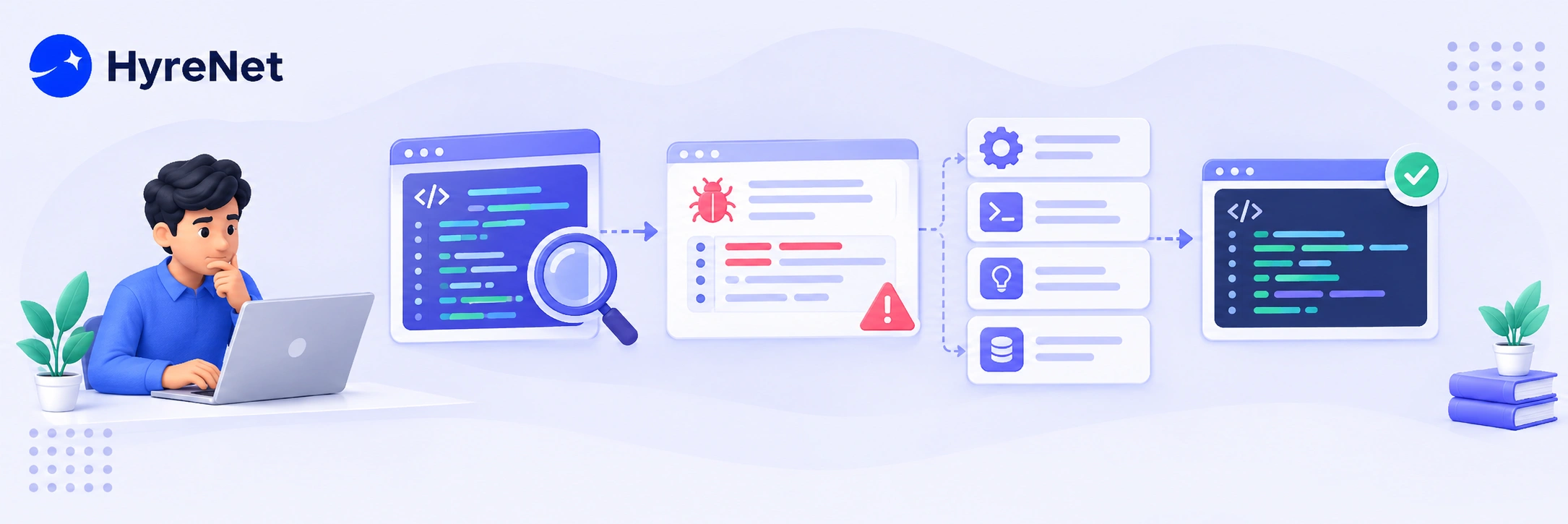
- Debugging tasks ask candidates to find and fix errors in existing code. These tasks are valuable because debugging is a routine part of real engineering work.
- System design exercises evaluate how candidates think about architecture, scalability, databases, APIs, and service communication. They are commonly used for mid-level and senior engineering roles.
- Multiple-choice technical quizzes test conceptual knowledge across programming, databases, cloud, frameworks, or computer science basics. They work well for early screening but should not be the only evaluation method.
- Take-home assignments give candidates more time to solve a practical problem. They can reveal deeper thinking, but they must be reasonable in scope to avoid candidate drop-off.
- Project-based assessments ask candidates to build or improve a small real-world application. These assessments are useful when the role demands practical delivery, clean structure, and end-to-end execution.
Advantages of Technical Assessments
- Better Skill-Based Screening: Technical assessments help recruiters check real technical ability before interviews. A candidate may list Python, JavaScript, SQL, or cloud tools on a resume, but a practical task shows whether that knowledge can be applied correctly.
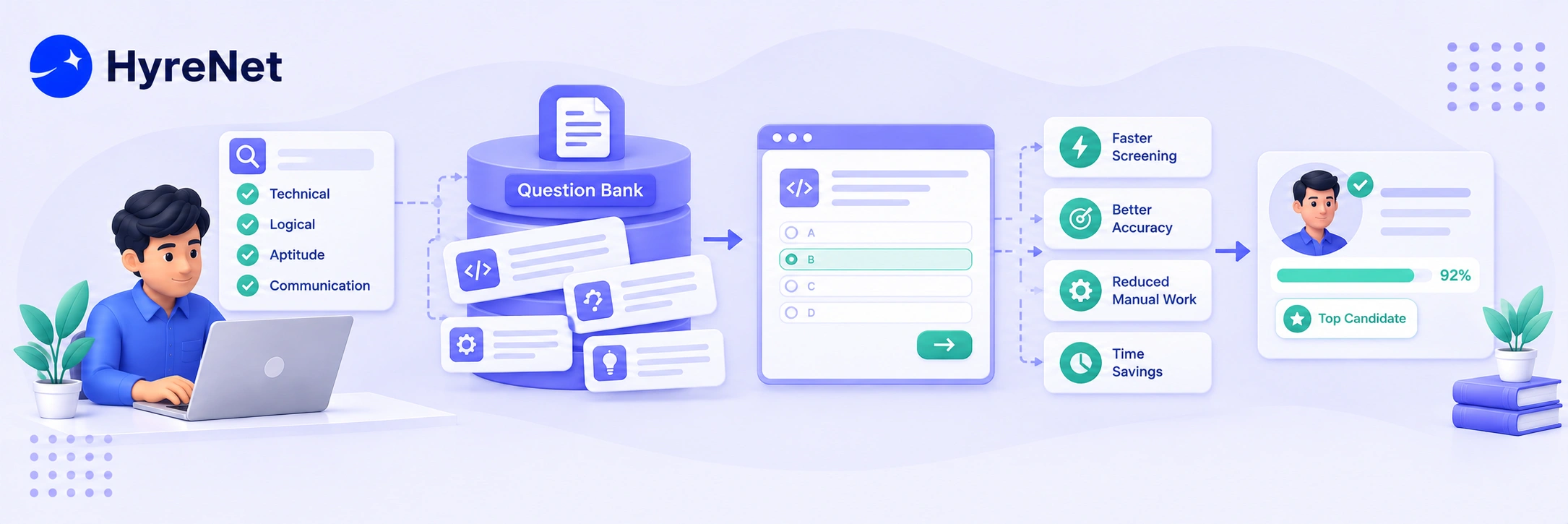
- Easier to Scale for Large Hiring Pipelines: Technical assessments work well for campus hiring, entry-level developer roles, and high-volume tech recruitment. They help teams evaluate many candidates through one structured process before moving stronger profiles to interviews.
- More Consistent Candidate Evaluation: Every candidate can receive the same task, time limit, and scoring criteria. This creates a fairer comparison because candidates are judged against a shared benchmark rather than different interviewer opinions.
- Stronger Role-Relevance: Technical assessments can be built around real job responsibilities. A backend developer can be tested on APIs and database logic, while a data engineer can be tested on SQL, pipelines, and workflow reliability.
Choose the right developer hiring method with HyreNet’s smarter technical assessment workflows. Compare technical assessments and coding interviews with clearer skill signals, structured evaluation, reduced interviewer workload, and data-backed insights that help recruitment teams identify job-ready developers with confidence.
Limitations of Technical Assessments
- Lengthy assessments can increase candidate drop-off.
- Unclear instructions can make the task feel unfair.
- Written tests may not show how candidates explain technical decisions.
- Online assessments can raise concerns around copied work or outside help.
- Generic tests may fail to reflect actual job responsibilities.
What Are Coding Interviews?
Coding interviews are live or guided technical evaluation sessions where candidates solve coding problems in front of interviewers. They help solve common recruitment challenges by giving interviewers direct visibility into a candidate’s reasoning process, technical depth, and communication style. This makes them especially useful after initial screening, when companies need to validate how well a candidate thinks, explains, and applies coding concepts in real time.
Common Coding Interview Formats
- Live coding interviews require candidates to solve a coding problem in real time. These sessions help interviewers assess speed, logic, and communication under pressure.
- Pair programming interviews involve the candidate and interviewer working through a problem together. This format is useful for checking collaboration, feedback response, and team fit.
- Whiteboard-style coding rounds focus on logic, algorithms, and problem structure. They are less common in practical hiring today, but some companies still use them for conceptual evaluation.
- Algorithm-based problem-solving tests a candidate’s understanding of data structures, complexity, and optimized logic. This format works best when algorithmic thinking is relevant to the role.
- Technical discussions with code review ask candidates to explain or critique code. This is highly practical because code review is a regular part of engineering teamwork.
Advantages of Coding Interviews
- Shows Real-Time Problem-Solving: Coding interviews help interviewers see how candidates approach unfamiliar problems. The process reveals how they read requirements, ask questions, and build a solution step by step.
- Evaluates Communication and Collaboration: Live coding shows how candidates explain logic, respond to feedback, and discuss trade-offs. This matters because developers need to work with engineering, product, QA, and design teams.
- Useful for Senior and Critical Roles: Coding interviews are valuable when deeper technical judgment is needed. Interviewers can ask follow-up questions about scalability, maintainability, performance, and system constraints.
Limitations of Coding Interviews
- Good developers may underperform because of live interview pressure.
- Interviewer bias can affect how performance is judged.
- Different interviewers may use different difficulty levels.
- Live rounds take more time to schedule and review.
- Coding interviews are difficult to scale for large hiring pipelines.
Technical Assessments vs Coding Interviews: Key Differences
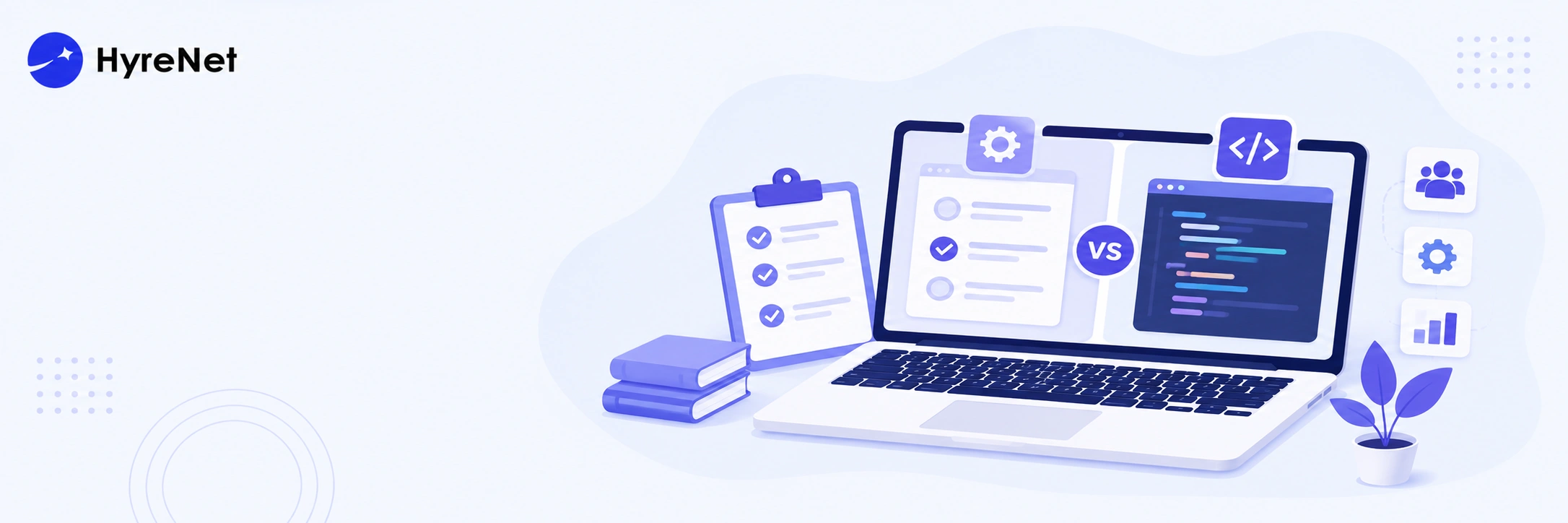
Technical assessments and coding interviews both help hiring teams evaluate developer ability, but they do it in different ways. A technical assessment checks how well a candidate applies skills through a defined task. A coding interview shows how the candidate thinks, explains, and responds during a live problem-solving discussion.
A strong technical hiring process should not treat these methods as competitors. Each one answers a different question. Technical assessments ask, “Can this candidate do the work?” Coding interviews ask, “How does this candidate think through the work?”
- Evaluation Format
Technical assessments are usually structured and asynchronous. Candidates receive a task, complete it within a given time, and submit their work for review. This format gives recruiters a clear way to compare candidates using the same criteria.
Coding interviews are live and interaction-based. Candidates solve problems in front of interviewers through a shared coding platform, video call, or pair programming setup. The interviewer can ask follow-up questions and observe how the candidate responds.
The main difference lies in visibility. Technical assessments show the quality of the final output. Coding interviews show the reasoning process behind the solution.
- Candidate Experience
Technical assessments often feel more flexible for candidates. They get time to read the problem, plan the solution, and submit their work without constant observation. This can help candidates perform closer to their actual working style.
Coding interviews can feel more stressful because candidates must think, code, and explain in real time. A skilled developer may still struggle under pressure, especially when the task feels distant from daily engineering work.
A candidate-friendly process should respect effort and time. Assessments should be clear and reasonable. Coding interviews should test relevant thinking, not only speed under pressure.
- Hiring Accuracy
Technical assessments are useful for measuring practical job skills at scale. A backend assessment can test API logic, database handling, and error management. A frontend assessment can test component structure, state handling, and interface logic.
Coding interviews add another layer of accuracy. They help interviewers understand how candidates explain decisions, handle feedback, and reason through constraints. These signals matter because developers work with teams, not only code editors.
Hiring accuracy improves when both methods work together. The assessment validates technical readiness. The coding interview validates reasoning, communication, and judgment.
- Time and Scalability
Technical assessments help recruiters screen more candidates in less time. Standard tasks, rubrics, and automated review can reduce early-stage hiring workload. This makes them useful for campus hiring and high-volume technical recruitment.
Coding interviews need more time from both recruiters and engineering teams. Every live round requires scheduling, interviewer availability, and detailed feedback. This can slow hiring when the applicant pool is large.
A practical approach is to use technical assessments before live interviews. This helps teams spend interview time on candidates who already show baseline technical ability.
- Bias and Consistency
Structured technical assessments can improve consistency because every candidate receives the same task and scoring criteria. A clear rubric helps reviewers judge correctness, code quality, readability, and problem-solving more fairly.
Coding interviews can vary based on interviewer style and question difficulty. Candidate nervousness can also affect performance. Two interviewers may judge the same answer differently if there is no shared scorecard.
Fair technical hiring needs process discipline. Standard questions and clear evaluation rubrics reduce inconsistency and improve trust.
Technical Assessments vs Coding Interviews
| Factor | Technical Assessments | Coding Interviews |
| Format | Structured tasks completed online | Live coding session with interviewer |
| Best For | Early screening and skill validation | Deeper evaluation and final technical rounds |
| Candidate Pressure | Lower | Higher |
| Skills Tested | Coding ability, debugging, logic, role-specific skills | Thinking process, communication, reasoning, feedback response |
| Scalability | Easy to use for large hiring pipelines | Hard to scale for high-volume hiring |
| Consistency | More consistent with fixed tasks and rubrics | Can vary by interviewer and question difficulty |
| Hiring Signal | Shows practical job readiness | Shows real-time problem-solving behavior |
| Main Risk | Long or unclear tests can cause drop-off | Stress and interviewer bias can affect results |
| Best Use Case | Screening many candidates before interviews | Validating shortlisted candidates |
| Ideal Approach | Use first to filter candidates | Use later to assess depth and fit |
When Should You Use Technical Assessments?
Use technical assessments when hiring teams need to:
- Screen many candidates quickly
- Check job-specific coding skills
- Compare candidates fairly
- Reduce interviewer workload
- Hire for junior or mid-level roles
- Manage campus or high-volume hiring
- Test practical skills before live interviews
When Should You Use Coding Interviews?
Use coding interviews when hiring teams need to:
- Evaluate real-time thinking
- Check communication skills
- Understand problem-solving depth
- Assess response to feedback
- Hire senior developers
- Review technical judgment
- Validate earlier assessment results
Best Hiring Approach: Combine Both Methods
Step 1: Use Technical Assessments for Initial Screening
Start with a role-relevant technical assessment to filter candidates based on real technical ability. The task should reflect the work the candidate will actually do after hiring.
A good early-stage assessment should be clear, focused, and reasonable in length. It should help recruiters identify candidates who meet the basic technical standard without creating unnecessary drop-off.
Step 2: Use Coding Interviews for Shortlisted Candidates
After candidates pass the assessment, use coding interviews to evaluate communication, logic, and problem-solving depth. This stage should focus on how candidates think, not only whether they reach the final answer quickly.
Interviewers can ask candidates to explain their assessment solution, improve part of their code, or solve a related problem. This makes the live interview more connected to the role and less dependent on random puzzle-style questions.
Step 3: Add Scorecards for Consistency
Structured scorecards help reduce bias and improve hiring accuracy. Every interviewer should rate candidates on clear factors such as problem understanding, code quality, communication, debugging ability, and response to feedback.
Scorecards also make hiring discussions more useful. Instead of relying on vague comments like “good candidate” or “weak fit,” teams can compare evidence across specific skills.
Step 4: Track Post-Hire Performance
Hiring teams should compare assessment and interview results with employee performance after hiring. This shows whether the evaluation process is actually predicting job success.
Useful signals can include manager feedback, time to productivity, code quality, project delivery, retention, and peer collaboration. This review helps companies improve their tests, interview questions, and scoring rubrics over time.
Final Takeaway
Technical assessments and coding interviews serve different purposes in developer hiring. Technical assessments help measure practical skills at scale, while coding interviews reveal communication, reasoning, and real-time problem-solving. Recruitment teams should combine both methods to build a fairer, faster, and more accurate technical hiring process.
FAQs
What is the difference between technical assessments and coding interviews?
Technical assessments are structured tests used to measure job-specific technical skills. Coding interviews are live sessions used to evaluate real-time problem-solving and communication.
Are technical assessments better than coding interviews?
Technical assessments are better for scalable skill screening. Coding interviews are better for evaluating thinking style, collaboration, and communication.
Should companies use coding tests before interviews?
Yes. Coding tests help shortlist skilled candidates before live interviews, which saves recruiter and interviewer time.
Do coding interviews accurately measure developer skills?
Coding interviews can measure problem-solving ability, but they should be structured to reduce stress, bias, and inconsistency.
What is the best way to hire developers?
The best approach is to use technical assessments for initial screening and coding interviews for deeper evaluation.